

Musical Youth was made up of a bunch of young kids from Birmingham, England, with Jamaican heritage. They burst onto the music scene, in spectacular fashion, with the release of “Pass the Dutchie.” It proved to be a big hit. But, the record became controversial for a couple of reasons which I will go into later.
Hopefully, once I have gone into a few more details about the meaning of “Pass The Dutchie” by Musical Youth, it will give you a better understanding of it. I also hope it will give you a better appreciation for this fun and energetic Reggae/Pop song from the 80s. So, let’s get straight to it and take a closer look at what the song “Pass the Dutchie” means.
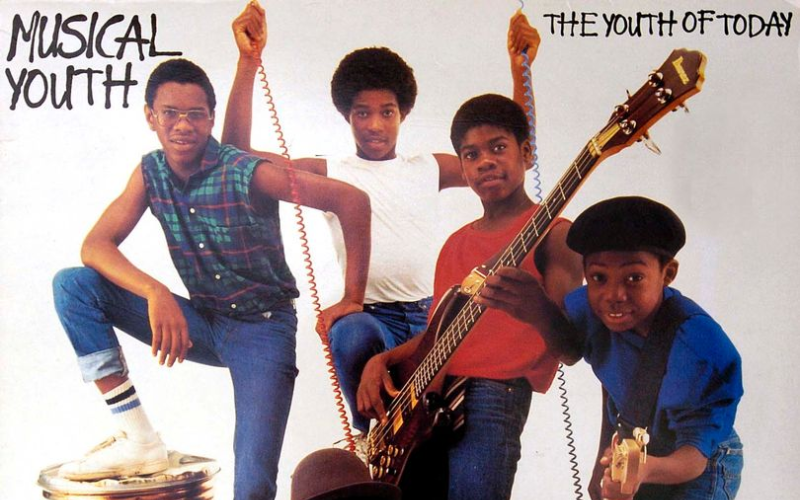
Chart Success
The song was released in August of 1982 by the British Jamaican band Musical Youth. Originally, the band was comprised of five kids. They were two sets of brothers, the Waites and the Grants, all with Jamaican heritage. Incredibly, all of them were aged between just 11 to 15 years old. However, their ages didn’t stop their debut song from being a huge hit.
So, how successful was it?
“Pass The Dutchie” went to #1 in the UK and several other European countries. It went to #10 in the US, though; unfortunately, it was the only song of theirs that charted there. The record went on to sell over five million globally. Additionally, it earned platinum discs in Canada and New Zealand. Plus, they got gold discs in the UK and the Netherlands.
“Pass The Dutchie” was the lead single from the album, The Youth of Today, which was released following the single’s success. Unfortunately, the album was not as well received as the single. It “only” made it to #24 in the UK and #23 in the US. However, it still earned gold discs in Canada and the UK.
It might be a bit harsh to call Musical Youth a one-hit-wonder…
However, the fact is that they didn’t even get close to the success of “Pass The Dutchie” with any future releases. Plus, their second album, Different Style!, only reached #143 in the US and 90 in Canada. It failed to chart anywhere else, and sales were poor. So, that kind of supports the notion that they were a bit of a one-trick pony from a musical perspective.
Recording and Video
The song is a Reggae/Pop song that is a rework of mainly two singles. The first was by the Jamaican band, The Mighty Diamonds, and was called “Pass the Kouchie.” It was from the album of the same name, which was recorded in 1982. The second song was “Gimme the Music” by U Brown, which played a lesser part in the recording.
I said that the song was mainly a mix of two singles because it also features another piece of music in the short intro segment. In this case, it uses shouted lyrics, which were slightly altered, from a song by U Roy titled “Rule the Nation.”
“Pass The Dutchie” was recorded by the major label MCA Records. Interestingly, Pete Waterman, of the powerhouse trio of writers and producers, Stock, Aitken, and Waterman, had a hand in the production. If you don’t know how influential these three guys were on the British music scene in the 80s, I can tell you that artists under their wing included Rick Astley, Kylie Minogue, and many more.
The video was way ahead of its time…
And it featured a great story that consisted of them playing on a bridge on the Thames river in London. Subsequently, a school official tries to arrest one of the band members but falls and hurts himself. The next scene involves them being taken to court, where they are finally found not guilty by a jury. Lots of celebrations follow, and the video ends.
It is a fun video, and MTV quickly picked it up and played it heavily on rotation. This was MTV back in the 80s, so it was played a lot. No doubt, the exposure had a big part in propelling sales globally. Interestingly, it also made a bit of MTV history as it was the first video they played to feature black artists.
Lyrics and Meaning
This is about the most inappropriate song I can think of for a set of schoolchildren to sing about. Frankly, you would be hard-pressed to find anything much worse. How on earth the song managed to get past the sensors is a mystery. In this day and age, it is hard to believe it would even get past the recording stage.
So, what makes it so bad?
It is not that the song is bad; it is just that the material is not child-friendly. That is because the song combines two songs, as I have previously discussed, but one of the songs contains frequent references to drug taking.
The song “Pass the Kouchie” is about cannabis use. “Kouchie,” or “Kutchie,” as it is also known, is a Jamaican slang term for the pot that is used to hold marijuana. The pot is passed around so that the users can take out whatever they need. This gives you an interesting insight into why we use the slang word “pot” for cannabis.
For whatever reason…
Musical Youth wanted to use that song as the basis for their own. As a result, they had to change things to get the final song past the witless, possibly stoned, censors. Consequently, the band, or more probably their management team, came up with changing the word “kouchie” to “dutchie.”
This was a clever move because “dutchie” is a Jamaican reference to a large clay cooking pot. Therefore, this pot would only ever stay on the stove and never be passed around. Happily for the band, the sly change was enough to prevent them from getting banned.
However, it was nowhere near enough to change the core meaning of Musical Youth’s “Pass the Dutchie.” You only need to look at the rest of the lyrics of the original song by The Mighty Diamonds to understand this.
A Hiding Meaning?
The Mighty Diamond penned a line asking how it feels when you’ve got no herb. However, Musical Youth tidies this up by changing the word “herb” to “food.” It is difficult to know if the kids understood the significance of what they were singing. But their fathers, managers, and producers would have known exactly what they were doing. Not cool.
The change of the word from “herb” to “food” is also interesting for another reason. It further whitewashes the song from that of drug taking to a more wholesome song about the sharing of food. Therefore, it could have been interpreted as something about feeding the soul and being a song about spirituality. I guess you could say that was the meaning behind “Pass the Dutchie.”
In reality, it was anything but…
If you are still not convinced that the meaning of “Pass the Dutchie” is about smoking weed, then the fifth line of the second verse of the original song should leave you in no doubt. It retells the scene of someone coming across a group of dreadlocked Rastas sitting in a circle in the middle of a “session.”
Musical Youth tries to spin it with the fact that they are on some kind of crazy mission in search of food. Frankly, they are not convincing anyone. We all knew exactly what they were talking about. Other than the sensors, it seems.
So, is this all the song is about?
No, it isn’t, despite being an integral part of it. Another large component of the song is the love of music. There is no argument here because more than half of the song is dedicated to lyrics that describe the joy of music and dancing. The lyrical content also is very clear about their pleasure in being able to share their passion with others.
It’s a fascinating song that many loved just for the groove and feel-good factor. There is nothing wrong with that. However, the meaning of “Pass the Dutchie” by Musical Youth is not all as it seems, which I’m sure you will now agree with.
Controversy
With many hit songs, there are frequent controversies usually rooted in money. This song is no exception. Consequently, more than 20 years later, Musical Youth found themselves in court trying to hang on to the copyright of their most successful song.
They claimed that they had changed enough of the lyrical content and also extended the track sufficiently to make it their own. In today’s environment, where copyrights are pursued much more rigorously, this seems absurd. However, the saga goes back over 40 years, before the internet, when things and life, in general, were very different.
When the song was released, the band and their advisors thought they had done nothing wrong. However, as time progressed, The Mighty Diamonds thought otherwise and took legal action. As a consequence, and rightly, in my opinion, they won a split of the royalties already earned.
Allow me to explain…
When you look at the similarity between “Pass the Kouchie” and “Pass the Dutchie,” it is almost impossible not to side with the original artists. A few tweaks of words here and there and extending the song in no shape or form make it theirs.
I find it hard to understand how they could have gotten away with it for so long. And how The Might Diamonds didn’t jump straight on it. Unless, of course, they were far too busy back in Jamaica making music, dancing, and getting involved with traditional Jamaican “activities.” But that is another story.
It is great that justice was eventually served, and The Mighty Diamonds got what they were due. However, despite this and the controversy surrounding the song, it doesn’t diminish what a great piece of music, “Pass the Dutchie,” was and still is. It also doesn’t detract from the wonderful job this group of youngsters from Birmingham did in performing it.
Have a Hankering for More 80s Music?
Well, check out our thoughts on the Best 80s Rock Songs, the Best 80s Love Songs, the Most Famous Male Singers Of The 1980s, the Most Famous Female Singers Of The 1980s, and the Best 2 Live Crew Songs of All Time for more memorable songs from the 80s.
Meaning Of “Pass The Dutchie” By Musical Youth – Final Thoughts
No doubt this was a catchy and well-sung song that many of us remember as a fun piece of music from the early 80s. It is not necessary to delve into anything deeper if you don’t want. However, I hope you now have a better understanding of the meaning of the song “Pass the Dutchie.” I also hope that it has enhanced rather than detracted from your enjoyment of it.
Until next time, happy listening.
